Oldy Beany Duo: Vintage Boldness, Done Right
If you’ve ever scrolled past a café sign with hand-painted lettering, flipped through a 1950s magazine spread, or paused on a boutique’s chalkboard menu—then you already know the kind of warmth and authority Oldy Beany Duo delivers. It’s not just another retro font. It’s a thoughtfully crafted vintage font duo that balances nostalgic charm with sharp, intentional design discipline.
A Bold Pair With Clear Personality
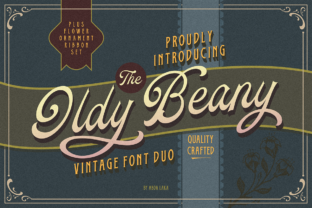
Oldy Beany Duo consists of two complementary typefaces: a commanding serif display font and a clean, slightly condensed sans serif. The serif carries generous stroke contrast, subtle flares at terminals, and upright, confident letterforms—think mid-century advertising posters or classic book covers. Its x-height is generous, so it holds presence even at smaller sizes without sacrificing legibility. The sans counterpart isn’t generic—it’s warm, human-scaled, and engineered to echo the rhythm and weight of its serif sibling. Neither feels dated; both feel *intentional*.
This isn’t script or handwritten typography. There’s no forced quirkiness or exaggerated flourishes. Instead, Oldy Beany Duo offers restrained confidence—a boldness rooted in structure, not gimmick. That’s why it reads as authentic rather than costumed. It doesn’t shout “vintage!”—it quietly *is* vintage, refined for today’s design context.
Where This Duo Actually Shines (Beyond the Obvious)
Designers often reach for retro fonts for logos or social banners—and yes, Oldy Beany Duo works beautifully there—but its real strength lies in layered, functional applications:
- Editorial design: Use the serif for headlines and pull quotes in zines, newsletters, or indie magazines. Its clarity and character hold up alongside body text set in a neutral serif or sans.
- Packaging design: On apothecary labels, small-batch coffee bags, or artisanal soap wraps, the duo creates instant hierarchy and tactile credibility—no photography required.
- Web design: As a display font pair, it performs well in hero sections, feature headers, or CTA buttons—especially when paired with a highly readable web-safe body font like Inter or Lato.
- Social media graphics: Standout Instagram carousels, Pinterest pins, or TikTok thumbnails benefit from its strong silhouette and immediate visual recognition.
- Brand identity systems: Small businesses—from ceramic studios to neighborhood bakeries—use Oldy Beany Duo to signal craftsmanship and care without leaning into cliché.
It’s also quietly effective in print collateral where tone matters: wedding invitations with quiet elegance, conference programs that feel substantial but not stiff, or even internal team decks where visual consistency builds trust over time.
What It Does for Your Audience (and Your Brand)
Typography isn’t decoration—it’s silent communication. Oldy Beany Duo shapes perception before a single word is read. Its bold, upright stance signals reliability and intention. Its vintage roots suggest authenticity and time-tested values—without feeling dusty or exclusionary. That’s key: it avoids the trap of “retro” fonts that unintentionally alienate younger audiences by leaning too hard into nostalgia.
In practice, this means better visual hierarchy. Headlines pop. Supporting text stays grounded. Readers don’t pause to decode the type—they absorb your message faster. And because both fonts share proportional DNA (similar cap height, consistent spacing cues), switching between them feels natural—not jarring. That cohesion strengthens brand recognition across touchpoints, whether someone sees your logo on a business card or your Instagram bio.
Practical Tips Before You Install
Before dropping Oldy Beany Duo into your next project, ask yourself three things:
- Is this a display use case? It’s a premium font duo built for impact—not long paragraphs. Reserve it for headlines, logos, signage, and short-form emphasis. For body copy, pair it with something highly legible (a neutral sans or traditional serif).
- How does it behave at small sizes? Test the serif at 18–24px in digital interfaces and 8–10pt in print. It holds up well—but avoid pushing below those thresholds unless you’re using it purely decoratively.
- What’s included in the package? Check whether you’re getting both weights (regular + bold) for each style, plus basic OpenType features like ligatures or alternate characters. Some versions include extended language support—important if your audience spans multiple regions.
Font pairing? Start simple. Try the serif headline with a modest sans like Poppins or Montserrat for balance. Or go monochrome: use the duo’s own sans for subheads and captions. Avoid overly decorative companions—the strength of Oldy Beany Duo is its clarity, not clutter.
Licensing That Fits Real Work
Oldy Beany Duo is a commercial font, meaning it requires a license for any use tied to business, branding, or public-facing content—even if you’re a solo blogger monetizing via ads or affiliates. Most reputable sellers offer clear, tiered licensing: desktop-only (for static designs), web (for live sites), and extended (for apps or SaaS platforms). Read the fine print on redistribution—especially if you’re a designer delivering assets to clients. A standard desktop license doesn’t cover client use after handoff.
And one last note: if you’re evaluating fonts for a long-term brand system, consider how Oldy Beany Duo scales across mediums. Does it render cleanly on mobile? Does it print crisply at 300dpi? Does it load quickly on websites when self-hosted? These aren’t theoretical concerns—they’re daily workflow realities.
At its core, Oldy Beany Duo succeeds because it respects both the craft of typography and the practical needs of people making things. It doesn’t ask you to choose between personality and professionalism—or between vintage appeal and modern usability. It gives you both, thoughtfully balanced, ready to work.