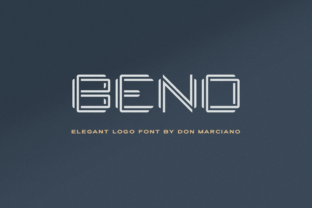
Bend Font: A Futuristic Two-Line Display Typeface for Elegant, Modern Design
Typography is more than just letters on a screen—it’s visual voice. It conveys tone, intention, and identity before a single word is read. Among today’s most distinctive display fonts, Bend stands out not just for its striking appearance, but for its thoughtful design philosophy: a clean, two-line structure with an unmistakably futuristic feel—yet grounded in timeless elegance.
What Is Bend Font—and Why Does Its “Two-Line” Structure Matter?
Bend is a contemporary display typeface designed specifically to function as a bold, high-impact headline or title font. Its defining characteristic is its two-line construction: each character is composed of two parallel strokes that subtly converge, diverge, or arc—creating dynamic tension and visual rhythm. Unlike monoline or geometric sans-serifs, Bend avoids uniformity; instead, it embraces controlled asymmetry and fluid geometry.
This isn’t decorative gimmickry—it’s intentional typography engineering. The dual-stroke system gives Bend optical stability at large sizes while preserving legibility even when scaled down for subheadings or short captions. Think of it like architectural framing: two load-bearing lines support expressive form without sacrificing structural integrity.
More Than Just “Futuristic”—A Balance of Innovation and Refinement
When people hear “futuristic font,” they often imagine sharp angles, neon glows, or cyberpunk motifs. Bend defies that stereotype. Its futurism lies in restraint—not flash. The curves are precise, the spacing generous, the contrast subtle. There are no exaggerated terminals or sci-fi embellishments. Instead, Bend evokes forward-thinking minimalism: the kind seen in premium tech interfaces, luxury brand identities, and progressive educational platforms.
This balance makes Bend unusually versatile. It can anchor a sleek startup homepage and elevate a museum exhibition poster. It feels at home beside both serif body text (like Playfair Display) and neutral sans-serifs (like Inter), thanks to its strong yet unobtrusive personality.
Where Bend Fits in Real-World Design Workflows
Understanding where and how to use Bend helps designers avoid common pitfalls—like overusing novelty fonts or misjudging hierarchy. Here’s how professionals apply it meaningfully:
- Brand Identity Systems: Startups in AI, sustainability, and digital health frequently choose Bend for logotypes or wordmarks. Its two-line motif subtly suggests connection, duality, or transformation—concepts central to their missions.
- Digital Interfaces: UI designers use Bend sparingly—for hero section headlines, feature cards, or modal titles—where clarity and memorability matter most. Its open letterforms improve readability on varied screen resolutions.
- Educational & Cultural Institutions: Universities launching new online learning platforms or galleries rebranding for digital engagement select Bend to signal innovation without alienating traditional audiences.
- Editorial Design: Magazines and digital publications deploy Bend for cover lines or chapter headers—adding sophistication without competing with narrative-driven body copy.
Crucially, Bend is not intended for long-form reading. It lacks the x-height consistency, glyph diversity, and typographic nuance required for paragraphs. Using it as body text would undermine both its strength and your message’s accessibility—a frequent beginner mistake.
Common Misconceptions About Bend—and What They Reveal
A few assumptions about Bend surface regularly among new users. Clarifying them deepens understanding:
- “It’s only for tech brands.” Not true. While Bend’s aesthetic aligns well with innovation sectors, its elegance translates across industries—from artisanal food packaging to contemporary dance company branding—whenever refinement and forward motion are core values.
- “The two lines mean it’s hard to pair with other fonts.” Quite the opposite. Because Bend’s stroke weight and proportions are carefully calibrated, it harmonizes with a wide range of secondary typefaces—especially those with moderate contrast and open apertures.
- “It’s too ‘cold’ or impersonal.” Bend’s warmth comes from its humanist touches: slight modulation in stroke endings, gentle curve inflections, and balanced negative space. When set with warm color palettes or organic photography, it feels inviting—not sterile.
How Bend Supports Broader Creative & Professional Goals
In today’s fast-scrolling, attention-scarce digital landscape, typography must do more than look good—it must communicate instantly and authentically. Bend supports this by offering what designers call semantic clarity: its form reinforces its function. The converging lines suggest focus; the rhythmic repetition implies reliability; the precision signals competence.
For businesses, choosing Bend signals intentionality—not trend-chasing. It tells stakeholders: We invest in considered design because our ideas deserve clear, dignified expression. That perception builds trust, especially in competitive fields like fintech, edtech, or healthcare innovation.
In education and creative learning, Bend also serves as a compelling case study in modern type design principles. Students exploring font anatomy, optical scaling, or responsive typography gain concrete insight by analyzing how Bend solves real-world problems—like maintaining legibility across devices or balancing uniqueness with usability.
Getting Started With Bend: Practical Tips for Beginners
If you’re new to using Bend—or display fonts in general—here are actionable, beginner-friendly best practices:
- Start with hierarchy: Use Bend exclusively for H1 or H2 headings. Pair it with a highly readable, web-optimized body font (e.g., Source Sans Pro or IBM Plex Sans).
- Respect spacing: Bend thrives with generous letter-spacing (tracking) at larger sizes—typically +50 to +150 units depending on size and context. Tight tracking undermines its rhythm.
- Test across contexts: View Bend in light/dark mode, on mobile and desktop, and alongside imagery. Its elegance emerges most clearly against uncluttered backgrounds.
- Leverage variable font features: If using a variable version of Bend, explore weight and width axes to fine-tune impact without switching families.
Why Bend Reflects a Larger Shift in Design Thinking
Bend is more than a font—it’s emblematic of a maturing design culture. We’re moving past “more is more” aesthetics toward precision with purpose. In an era saturated with AI-generated visuals and algorithmic layouts, hand-crafted typefaces like Bend remind us that thoughtful human decisions still define great communication.
Its success isn’t measured in downloads alone—but in how often it helps a nonprofit articulate its mission more powerfully, enables a teacher to make complex concepts feel approachable, or allows a small business to stand out with quiet confidence rather than loud noise.
That’s the enduring value of elegant, future-facing typography: it doesn’t shout to be seen. It invites—then rewards—closer attention.
Final Thought: Typography as Quiet Leadership
In leadership, influence often lives in subtlety—in listening more than speaking, in preparation over performance. Bend operates similarly in design: it doesn’t dominate a layout; it elevates it. It doesn’t distract with novelty; it clarifies with presence. Whether you’re building a portfolio, launching a product, or redesigning a curriculum, choosing Bend is a decision to prioritize meaning, dignity, and forward-looking grace.
And in doing so, you join a growing community of creators who believe that the most powerful futures aren’t built with spectacle—but with substance, sensitivity, and style rooted in deep understanding.