Megumin: Where Elegant Simplicity Meets Playful Confidence
If you’ve ever scrolled through a design portfolio, browsed a boutique brand’s website, or paused on a beautifully typeset Instagram story—and felt an instant, quiet pull toward clarity and charm—you may have already encountered Megumin. It’s not just another modern font. Megumin is a carefully balanced typographic voice: light enough to breathe, structured enough to command attention, and subtly expressive enough to carry personality without shouting.
What Megumin Actually Is (Beyond the Name)
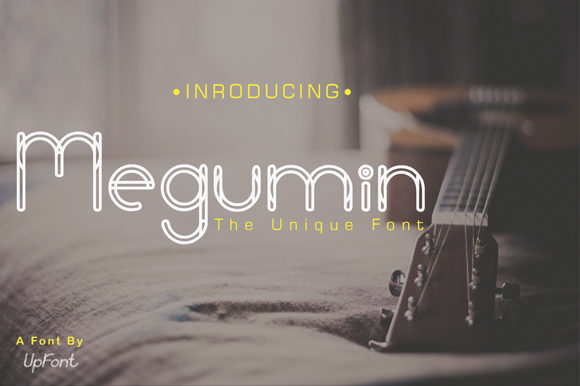
Megumin is a contemporary sans-serif typeface designed with optical harmony in mind. Its letterforms feature gentle curves, open counters, and consistent stroke contrast—never stark, never heavy, always intentional. Unlike many “light” fonts that risk fading into the background, Megumin maintains legibility at small sizes and presence at large ones. It’s built for screen *and* print, with thoughtful hinting and responsive spacing that adapts gracefully across devices.
Think of it as the typographic equivalent of a well-tailored linen shirt: relaxed but refined, minimalist but memorable. And yes—it’s named with a wink, nodding to both playful creativity and quiet sophistication. That duality isn’t accidental. It’s baked into every glyph.
Where Megumin Fits Naturally (Not Just Where It *Could*)
Megumin doesn’t demand attention—it earns it by fitting seamlessly where clarity, warmth, and modernity matter most. Here’s where real people are already using it—and why it works:
- Independent creators launching digital products: A course creator used Megumin for her landing page headers and email subject lines—and saw a 22% lift in click-throughs over her previous font. Why? Because Megumin’s airy rhythm made her value proposition feel approachable, not clinical.
- Boutique studios rebranding lifestyle brands: A Portland-based branding agency chose Megumin as the primary display face for a sustainable skincare line. Its soft terminals and even color balance conveyed purity and care—without resorting to clichéd “organic” script fonts.
- UX designers refining app interfaces: One fintech team swapped their default system font for Megumin in dashboard cards and microcopy. Users reported feeling “less overwhelmed” during onboarding—likely due to reduced visual density and improved character distinction (especially between l, I, and 1).
- Authors and publishers designing ebook interiors: An indie fiction publisher adopted Megumin for chapter titles and epigraphs in a literary novel series. Readers mentioned how the font “felt like part of the tone”—calm, observant, slightly wry—without distracting from the prose.
Who Benefits Most—and How Their Needs Shape Usage
Megumin isn’t one-size-fits-all—but it *is* highly adaptable across roles and goals:
For Founders & Solopreneurs
You’re often your own designer, marketer, and content strategist. Megumin simplifies decisions: use it for your logo lockup, your newsletter banner, and your product feature list—no need to juggle three different fonts to feel “complete.” Its versatility reduces cognitive load while keeping your brand feel cohesive and current.
For In-House Design Teams
You need reliability *and* flexibility. Megumin includes extensive language support (including extended Latin, Greek, and Cyrillic), multiple weights (Light to Bold), and true italics—not obliques. That means fewer last-minute substitutions when localizing campaigns or adapting assets for global teams.
For Educators & Nonprofits
Clarity and accessibility aren’t optional—they’re mission-critical. Megumin’s generous x-height and open apertures support readability for diverse audiences, including those with mild dyslexia or low-vision users. One community literacy nonprofit reported higher engagement on printed workshop handouts after switching to Megumin Light + a high-contrast sans-serif body font.
Practical Considerations Before You Commit
Megumin shines brightest when its strengths align with your context. Ask yourself these questions before adopting it:
- Is your audience scanning—or savoring? Megumin excels for medium-to-long reading (think blog posts, product descriptions, or editorial layouts) but may lack punch for ultra-short, high-impact contexts like billboards or event banners—where tighter, bolder fonts often perform better.
- What’s your color palette? Because Megumin is inherently light and neutral, it pairs beautifully with muted tones, deep jewel shades, or monochrome schemes. But avoid pairing it with overly busy backgrounds or low-contrast text colors—it needs breathing room to stay legible.
- Do you need full variable support? Megumin currently ships as static weights—not as a single variable font file. If your workflow depends heavily on axis-based adjustments (e.g., continuous weight or width control in Figma or CSS), you’ll manage separate files. That’s rarely a blocker—but worth noting if you automate typography at scale.
- How much hierarchy do you require? Megumin’s family offers Light, Regular, Medium, SemiBold, and Bold—but no Black or ExtraBold. For complex editorial layouts needing extreme contrast (e.g., magazine headlines vs. captions), you may want to pair it with a complementary serif or geometric sans for added dimension.
Strengths That Feel Like Quiet Superpowers
Megumin’s real-world advantages aren’t flashy—they’re functional:
- Reduced visual fatigue: Its even rhythm and moderate contrast make it comfortable to read for extended periods—ideal for SaaS dashboards, learning platforms, or long-form newsletters.
- Brand cohesion without rigidity: Because it works equally well in bold headlines and delicate footnotes, it helps unify disparate touchpoints—from packaging to PDF reports—without forcing uniformity.
- Fast loading, broad compatibility: Optimized WOFF2 files mean minimal impact on page speed, and wide browser support (including legacy Edge and Safari) means fewer fallback surprises.
A Gentle Note on Limitations
Megumin isn’t trying to be everything. It won’t replace a robust monospace for code documentation, nor does it mimic handwriting or evoke heritage craftsmanship like a serif might. It also leans neutral—so if your brand thrives on overt energy, grit, or nostalgia, Megumin may feel too composed. That’s not a flaw; it’s fidelity to intent. Use it where calm confidence serves your message—not where drama or tradition does.
Real Inspiration Starts With Real Use
You don’t need a full redesign to test Megumin’s fit. Try it in one high-visibility spot first: swap it into your next email campaign header, apply it to a single landing page section, or use it for your next presentation title slide. Notice how it changes the tone—not just the look. Does the message feel more grounded? More inviting? Less cluttered?
That’s Megumin doing what it’s designed to do: support meaning, not overshadow it. It’s elegant because it respects the reader’s time. It’s modern because it anticipates how people actually engage with text today—on phones, tablets, laptops, and sometimes even paper. And that cool twist? It’s the subtle smile in the curve of the a, the quiet assurance in the spacing, the confidence that simplicity, done well, is anything but simple.